Intelligence And Memory Shaped By Individual
Differences In Brain
MessageToEagle.com – Everyone has a different
mixture of personality traits: some are outgoing, some are tough and some are
anxious.
Now, researchers have focused on understanding
how intelligence is shaped by individual differences in brain structure and
function.
A new study suggests that brains also have different
traits that affect both anatomical and cognitive factors, such as
intelligence and memory.
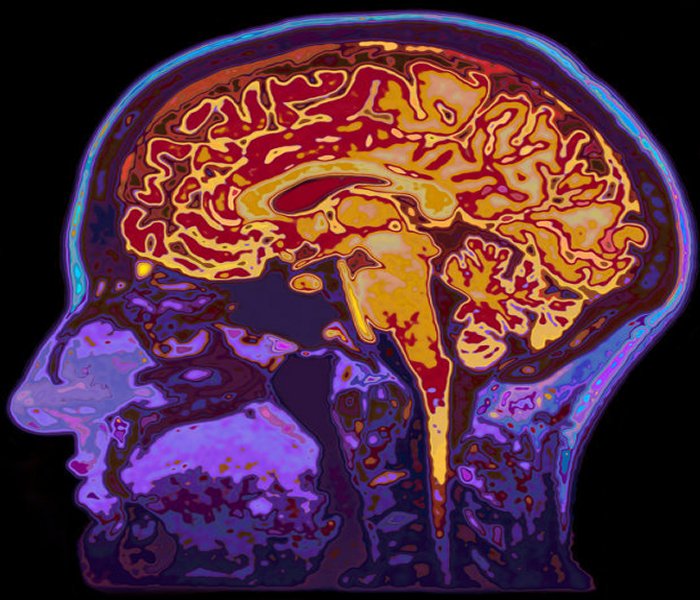
MRI image of brain (stock image). Postdoctoral
researcher Patrick Watson studied the relationship between individual brain
differences and cognitive abilities. Credit: © highwaystarz / Fotolia
For years, cognitive neuroscientists have tried to
find relationships between specific areas of the brain and mental processes
such as general intelligence or memory.
Now, Barbey and his team measured the size and shape
of features all over the brain.
“We were able to look at nerve fiber bundles,
white-matter tracts, volume, cortical thickness and blood flow,” said Patrick
Watson, a postdoctoral researcher at the Beckman Institute and first author of
the paper. “We also were able to look at cognitive variables like executive
function and working memory all at once.”
Using a statistical technique called independent
component analysis, the researchers grouped measures that were related to each
other into four unique traits. Together, these four traits explained most of
the differences in the anatomy of individuals’ brains.
The traits were mostly driven by differences in brain
biology, including brain size and shape, as well as the individual’s age. The
factors failed to explain differences in cognitive abilities between people.
The researchers then examined the brain differences
that were unexplained by the four traits. These remaining differences accounted
for the individual differences in intelligence and memory.
“We were able to identify cognitive-anatomical
characteristics that predict general intelligence and account for individual
differences in a specific brain network that is critical to intelligence, the
fronto-parietal network,” study leader Aron K. Barbey, University of Illinois neuroscience professor
said in a press release.
The four traits reported in this study are a unique
way to examine how brains differ between people. This knowledge can help
researchers study subtle differences linked to cognitive abilities, Watson
said.
“Brains are as different as faces, and this study
helped us understand what a ‘normal’ brain looks like,” Watson said. “By
looking for unexpected brain differences, we were able to home in on parts of
the brain related to things like memory and intelligence.”
The results are published in the journal NeuroImage.