Dear Friends,
http://www.rviewer.com/IngoSwann_encyclopedia.html
Be Well.
David
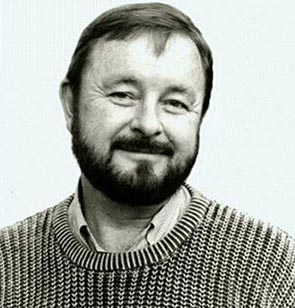
Ingo Swann
From: Encyclopedia of
Occultism & Parapsychology * 4th Ed.
Swann, Ingo (1933-2013)
Prominent American psychic
research subject, parapsychologist, and author. Born September 14, 1933, at
Telluride, Colorado, he studied at Westminster College, Salt Lake City, Utah,
receiving a double bachelor's degree in biology and art. He enlisted in the
U.S. Army and served three years in Korea, after which he worked for twelve
years at the United Nations Secretariat while pursuing an independent art
career.
Swann's active participation
in parapsychology research began in 1969 when he was 36 years old. During the
next twenty years he worked only in controlled laboratory settings with
scientific researchers. Although he lectured widely on the importance of
psychic faculties and potentials, he has never publicly demonstrated his
abilities. Because of his participation in hundreds of thousands of
experimental trials, author Martin Ebon wrote of him as "parapsychology's
most tested guinea pig," and Psychic News and other media often refer to
him as "the scientific psychic."
During the 1950s and 1960s,
because of psychic potentials partly evident in childhood, he became actively
interested in occult and parapsychological literature and in a variety of novel
mind-development programs which took positive approaches to the enhancement of
ESP potentials.
Swann early distinguished
between psychic phenomenon and psychic mind-dynamic processes. He especially
noticed that while parapsychology researched the existence of paranormal
phenomena (such as ESP, telepathy, and psychokinesis), there was little
interest in the mental processes involved in producing evidence of them. From
this distinction he slowly developed unique theoretical approaches to process
enhancement of psi perceptions, which was in keeping with ancient descriptions
of Siddhis as found in various Eastern Yoga literature and Abraham Maslow's
developmental abilitism theories.
In 1970-71 Swann
experimented with Cleve Backster in attempting to influence plants by mental
activity. In 1971-72 psychokinetic experiments involved successfully
influencing temperature recorded in a controlled setting devised by
parapsychologists Gertrude Schmeidler and Larry Lewis at City College, New
York. this involved PK effects upon target thermistors (temperature measuring
devices) in insulted thermos bottles at a distance of 25 feet from Swann. (For
a report, see G.R. Schmeidler, "PK Effects Upon Continuously Recorded
Temperature," Journal of the American Society for Psychical Research, no.
4, Oct. 1973).
Swann was also the subject
of experiments in out-of-body travel, or psychic perception at a distance.
These took place during 1971-73 at the American Society for Psychical Research.
They involved Swann sitting in a chair and attempting to project his
consciousness into sealed boxes on a small platform several feet above his head,
in which there was a target symbol completely shielded from view. Swann was
monitored by electrodes that would have recorded any movement from the chair.
Under these difficult
laboratory conditions, Swann nevertheless scored significant successes in
describing the targets. In one test he was actually able to state correctly
that a light that should have illuminated the target was inoperative. There was
no normal way of ascertaining this fact without opening the box.
In 1972-73, at the American
Society for Psychical Research, Swann began suggesting experimental protocols
to test for the existence of mind-dynamic processes that would enhance ESP and
Dr. Gertrude Schmeidler, he coined the term "remote viewing" to
describe the experiments in which subjects attempted to view targets at a far
distance. His original remote-viewing protocols were later utilized and
expanded upon in collaboration with the researchers Dr. H.E. Puthoff and
Russell Targ. Other laboratories ultimately repeated various kinds of remote-viewing
experiments.
Swann's successes on the
East Coast attracted the attention of the quantum physicist Harold E. Puthoff,
at the Standford Research Institute, in Menlo Park, California (later renamed
SRI International). From late 1973 until 1989 Swann worked principally at SRI's
"psychoenergetics project" established by Puthoff to examine
important psi faculties (rather than psychic phenomena per se).
One of the first most
remarkable experiments involved a successful attempt to influence the stable
magnetic field of a super-cooled Josephson junction inside a quark detector (a
complex apparatus designed to detect subatomic particles). The apparatus was
completely inaccessible, being encased in aluminum and copper containers and
buried in five feet of concrete. When Swann mentally visualized the hidden
target, significant variations were recorded in sine waves. This PK effect was
reported at a conference on quantum physics and parapsychology.
On April 27, 1973, in
another extraordinary experiment, Swann "visited" the planet Jupiter
in a joint "psychic probe" shared by fellow psychic Harold Sherman.
Swann's drawings made during the experiment showed a 'ring' of tiny asteroids
around the planet which scientists at the time said did not exist. The existence
of the ring was later scientifically confirmed in 1979.
From the first experiments,
Swann was increasingly considered a very unique test subject because, at the
command of the experimenters, he could reproduce and sustain the desired
effects over time at a significant rate of success. Throughout the history of parapsychology,
other test subjects had been temporarily or spontaneously successful. But these
subjects typically suffered from the well-known "decline effect" or
"psi-missing effect" which statistically erased the successes, and
thus permitted skeptics to believe that the successes were due to some outside
factor other than claimed human psi abilities.
Most books and articles
written after 1973 about parapsychology and psychic matters refer to Swann's
work in some way. Many analysts of science and parapsychology generally concede
that his work and the high levels of official sponsorship it obtained gradually
influenced positive reevaluations of the validity of psi in human experiencing.
After nineteen years on the
cutting edge of psi developments, the "longest run" of any subject on
record, Swann retired from full-time research to undertake independent research
into the problems and states of consciousness. In final interviews regarding
the dimensions of his past work, he stated that the long-term stresses of
laboratory work and the constant need to defend the validity of psi faculties
and exceptional experiencing had taken their toll. He occasionally accepts
invitations to lecture but refuses to talk to the media. In a paper read at the
United Nations in March 1994 (entitled "Scientists find the basis for
seventeen-plus human senses and perceptions"), he stated that psi
faculties and exceptional experiencing are not purely scientific issues. Their
discovery and development involve larger social, philosophical, political, and
religious problems not amenable to objective research and rational
appreciation.
ADDENDUM
The above encyclopedia
article is alright as far as it goes, but it was written before the full extent
of government involvement in ESP research, especially remote viewing, was
widely known. Now more of Ingo Swann’s
fascinating story is available, and I will summarize it here (many more details
are available in my book, Reading the Enemy’s Mind: Inside Star Gate –
America’s Psychic Espionage Program).
The most significant missing
fact is that the research program in which Hal Puthoff engaged Ingo was started
and funded by the United States intelligence community, and continued by
various of the military Services. You
can read a good overview of this part of remote viewing history on this site at
The Beginnings of Remote Viewing
Supported by the military
and intelligence communities, Ingo worked through the program at
SRI-International to not only explore the boundary conditions of remote viewing,
the consciousness-based skill that he had discovered and developed, but he used
it operationally to discover some of the secrets America’s erstwhile Cold War
opponents were trying to hide.
Eventually, Swann and Puthoff were asked to develop a teachable method
of remote viewing that could be transferred to otherwise ordinary military
personnel so they, too, could function as psychic spies.
After extensive research
over a number of years, the Swann/Puthoff team leveraged the resources of the
SRI consciousness program to develop what is now known as “controlled remote
viewing” – a six-stage method that can be taught and mastered by anyone of
sufficient mental competency. Among
those taught this method directly by Puthoff and Swann were Ed Dames, Bill Ray,
Tom McNear, Charlene Shufelt, and myself (Paul H. Smith) – though an
undisclosed number of others were taught as well. We in turn trained now widely-known remote
viewers such as Mel Riley, Lyn Buchanan, and David Morehouse.
Over the course of his career,
Swann not only introduced revolutionary new ways of thinking about
consciousness research, but created what is today probably the most successful
and widely-used method of teaching the practical use of consciousness-based
skills. In accomplishing those purposes,
he himself performed uncountable thousands of remote viewing sessions in
support of research, training, and operational goals. A listing of his research accomplishments can
be found here.
Even in his retirement, Ingo
Swann maintained an interest in the progress of our understanding of human
mental functioning, and was an avid observer not only of the human condition
itself, but of the inroads being made to discover the full potential of the
mind. At the time of his death, on
February 1, 2013, Ingo was well along in the process of creating a new book
featuring his marvelous art work.
Paul H. Smith, Ph.D.
No comments:
Post a Comment