Most of us spend a big part of our day sitting down,
and often when we go home we forgo physical exercise for an evening in front
of the TV or computer. All of these extended sitting sessions lead to us
slouching in our chairs. Even if we start by sitting upright, eventually our
muscles become fatigued, and we slouch, letting our bones take the brunt of
the weight instead of our muscles. Over time, our bad sitting posture becomes
our “regular” posture, and slouching can cause a host of problems: pain in the
shoulders, joints, neck, lower back, knees, and even headaches. The following
exercises will train the muscles in charge of supporting your spine, which
will help you maintain the proper sitting position.
|
|
|
|
|
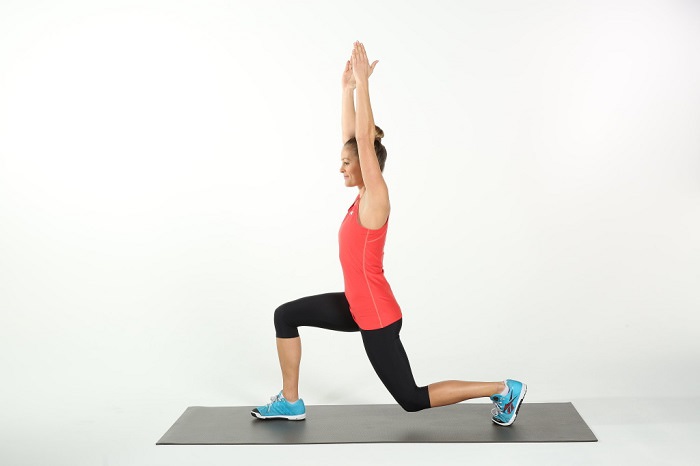
1. Strengthen your back with the “Warrior” pose
The “warrior” pose is an exercise that strengthens
your thighs and stretches your arms significantly – both are areas that are
important in reducing strain on your spine.
|
|
|
|
To perform this exercise, start by standing with
your legs straight together, and your arms stretched up. Step forward with
your right leg until your knee is at a 90° angle, and plant your foot firmly
on the ground. Next, stretch your left leg back. Hold the position for 5-10
seconds, and then stand back up. Repeat with opposite legs.
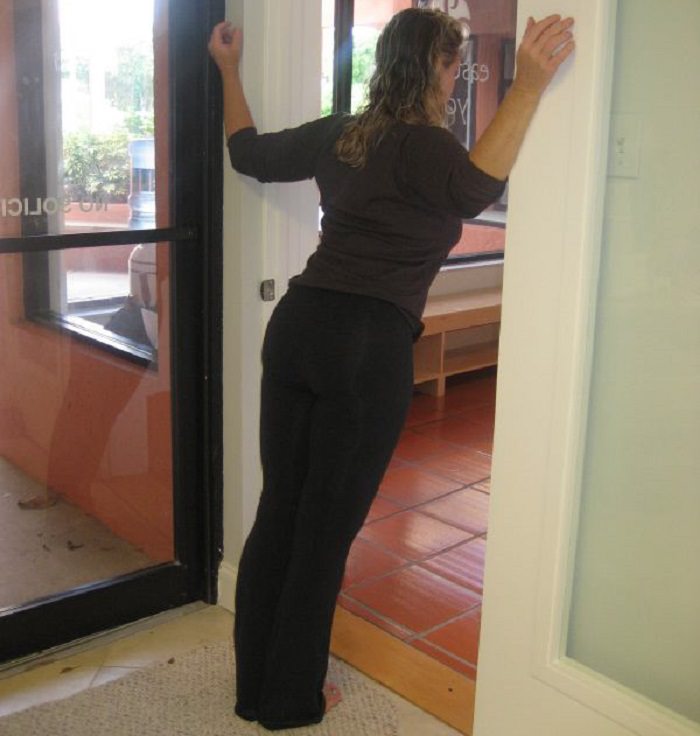
2. Chest stretches
This exercise simulates pushups while in a standing
position. It is designed to stretch your chest muscles and ease spinal pains.
|
|
|
|
Stand in an open doorway, place your hands at
shoulder height outside the doorframe. Bend your elbows and lean forward on
your toes while keeping your chest straight, and then push forward,
straightening your elbows. Repeat this action 5-10 times. The more you
perform this exercise, the more you’ll notice that it gets easier to bend
your elbows and resume your initial stance. Your goal is to be able to do
10-25 repetitions with ease.
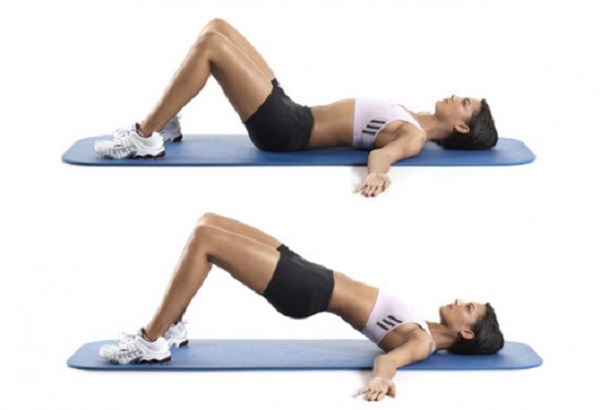
3. Strengthen your glutes
Hip and lower back pains are often the results of
weakened glute muscles that are having problems carrying the weight of your
spine. When our sitting posture is incorrect, it takes the pressure off of
our glutes, which ends up weakening them more. By performing the following
exercise regularly, you can relieve much of the pain caused by inactive glute
muscles, and preventing new pain from occurring.
|
|
|
|
To perform this exercise, lay a mat on the floor and
lie down on your back, with your knees bent at a 45° angle, and your legs
held tightly together. Now push your buttocks up, until your knees are bent
at a 90° angle. Keep your chest down, clench your buttocks while focusing on
pushing your legs down to the floor. Maintain this position
for a few seconds and release.
|
|
|
|
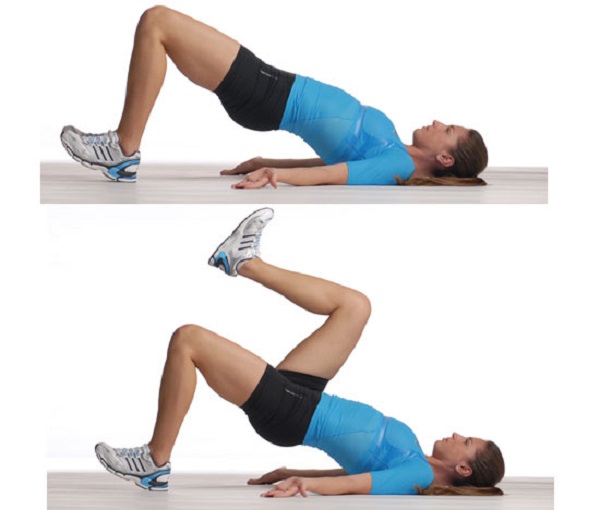
If the exercise feels too easy, try raising one leg
up while pushing up your buttocks.
4. Shoulder-strengthening pushups
In addition to regular pushups, you can perform this
variation that trains and strengthens your shoulders, which provides better
support during prolonged periods of sitting.
|
|
|
Begin in the pushup position, with your body leaning
on your straightened-out arms, palms facing down, your back straight, and
your legs stretched back. Next, instead of bending your elbows, keep your
arms straight and instead allow your shoulders to move (as seen in the
animation above). Repeat this exercise until you can easily perform 3 sets of
10 repetitions.
5. Stretching your Trapezoids
This simply stretch improves your shoulder region’s
flexibility where it connects to the spine. This will help your neck be more
limber and prevent future pain in the area.
|
|
|
|
Begin by standing or sitting on a chair without a
back. Keep your back straight, your arms loose at the sides of your body and
your legs straight and touching the floor. With one hand, reach up to touch
the opposite side of your head, gently pulling it towards the shoulder. Avoid
exerting force to avoid injuring the region. Remember that your hand’s goal
is to aid in the neck’s stretch, and not do it for it. Keep your head in this
position for 30 seconds, release, and then repeat for the other side. Perform
this stretch twice per side.
|
|
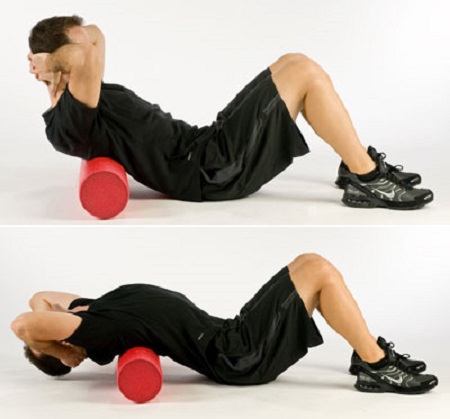
6. Chest expansion
The next exercise is meant to expand your chest in
order to relieve pain in the spine and help you resume an upright sitting
position. You will need a counterweight, such as a spongy roll, or a
rolled-up yoga mat.
|
|
|
|
Lean back on the roll while maintaining a natural
arch in your lower back and keeping your chest elevated. Put your hands
behind your head, placing your palms on the back of your neck, and lean down,
and then straighten back up. Be sure to keep your chin up to prevent
unnecessary stretching of the neck. When leaning back, focus on expanding
your ribcage. During this exercise, your lower back should remain static.
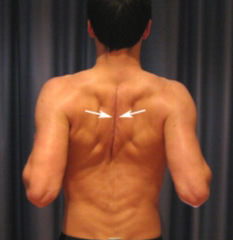
7. Strengthen the shoulder blades
The goal of this exercise is to move the bones that
connect your collar bone and your arm, in order to stretch and train your
back muscles and help them provide full support for your spine.
|
|
|
|
Stand up straight with your shoulders loose. Move
your shoulder blades towards each other until they meet, and remain in this
position for 5 seconds. Release and repeat 5 times.
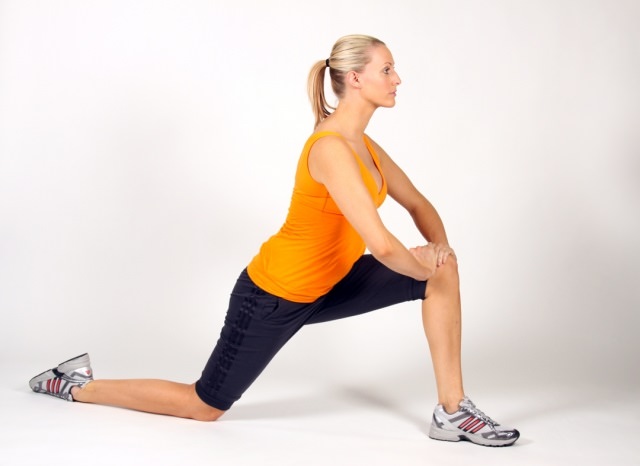
8. Thigh muscles stretch
The hip muscles provide support for our backs, but
most of us never associate back pains with weaker thigh muscles.
|
|
|
Begin by getting down on one knee, keeping it bent
at a 90° angle, with your other leg pulled back, keeping your knee below your
ankle.
It’s important to remember that performing these
exercises once or twice a day will not counter 8 hours of sitting down, so
make sure you’re aware of your posture when you’re sitting down and make an
effort to take small breaks and perform mild physical exercise. However,
following this routine will make it easier to resume a correct sitting
position that won’t tire out your back.
|



No comments:
Post a Comment