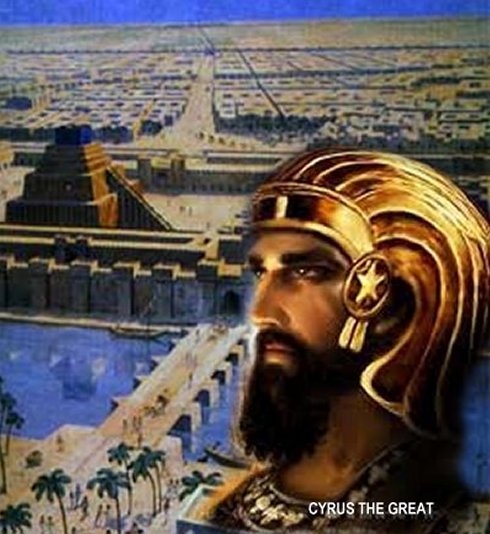
CYRUS THE GREAT
CYLINDER – LEGACY OF THE ANCIENTS
The Cyrus Cylinder,
sometimes referred to as the first “bill of human rights,” traces its origins
to the Persian king Cyrus the Great’s conquest of Babylon in the sixth century
B.C.
Almost 2,600 years
later, its remarkable legacy continues to shape contemporary political debates,
cultural rhetoric and philosophy.
One of the most celebrated
objects in world history, the Cyrus cylinder is a fragmentary clay cylinder
with an Akkadian inscription of thirty-five lines discovered in a foundation
deposit by A. H. Rassam during his excavations at the site of the Marduk temple
in Babylon in 1879.
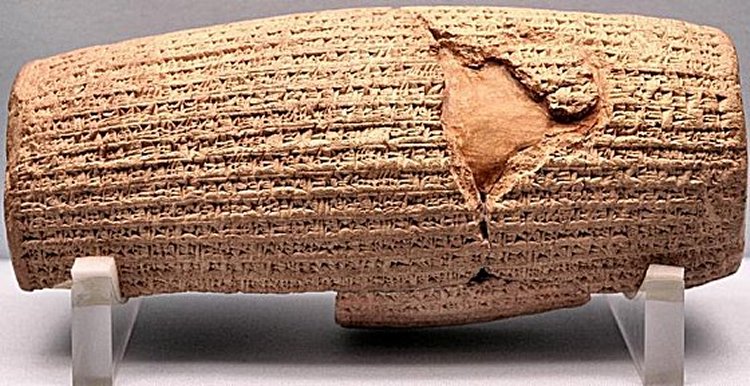
In this text, a
clay cylinder now in the British Museum, Cyrus describes how he conquers the
old city. Nabonidus is considered a tyrant with strange religious ideas, which
causes the god Marduk to intervene. That Cyrus thought of himself as chosen by
a supreme god, is confirmed by Second Isaiah; h is claim that he entered the
city without struggle corroborates the same statement in the Chronicle of
Nabonidus.
A second fragment,
containing lines 36-45, was later identified in the Babylonian collection at
Yale University. The total inscription, though incomplete at the end, consists
of forty-five lines, the first three almost entirely broken away.
The text contains
an account of Cyrus’ conquest of Babylon in 539 B.C.E., beginning with a
narrative by the Babylonian god Marduk of the crimes of Nabonidus, the last
Chaldean king (lines 4-8).
Then follows an
account of Marduk’s search for a righteous king, his appointment of Cyrus to
rule all the world, and his causing Babylon to fall without a battle (lines
9-19). Cyrus continues in the first person, giving his titles and genealogy
(lines 20-22) and declaring that he has guaranteed the peace of the country
(lines 22-26), for which he and his son Cambyses have received the blessing of
Marduk (lines 26-30).
He describes his restoration
of the cult, which had been neglected during the reign of Nabonidus, and his
permission to the exiled peoples to return to their homeland (lines 30-36).
Finally, the king records his restoration of the defenses of Babylon (lines
36-43) and reports that in the course of the work he saw an inscription of
Aššurbanipal (lines 43-45).
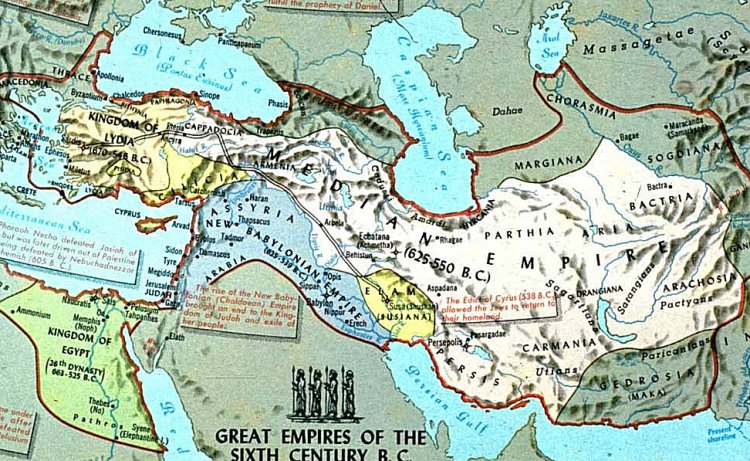
Persian Empire Map
During King Cyrus The Great
The Cylinder—a
football-sized, barrel-shaped clay object covered in Babylonian cuneiform, one
of the earliest written languages—announced Cyrus’ victory and his intention to
allow freedom of worship to communities displaced by the defeated ruler
Nabonidus. At the time, such declarations were not uncommon, but Cyrus’ was
unique in its nature and scope.
When contextualized with other contemporary sources, such as the Bible’s Book of Ezra, it becomes evident that Cyrus allowed displaced Jews to return to Jerusalem.
“One of the goals
of this exhibition is to encourage us to reflect that relations between
Persians and Jews have not always been marked by the discord that disfigures
the political map of the Near East today,” said Julian Raby, The Dame Jillian
Sackler Director of the Arthur M. Sackler Gallery and the Freer Gallery of Art.
“Cyrus was the very
image of a virtuous rule¬—inspiring leaders from Alexander the Great to Thomas
Jefferson—so it is apt that the first time it will be seen in the West is in
Washington, D.C.”
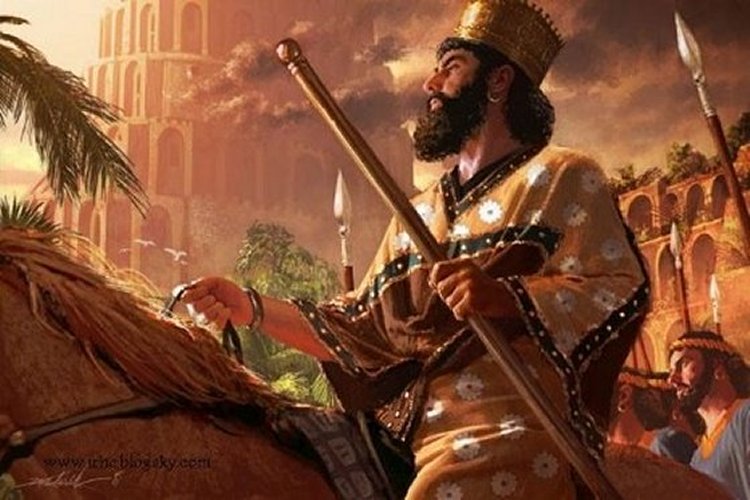
Cyrus – The Great
Of Persia
Under Cyrus (ca.
580–530 B.C.), the Persian Empire became the largest and most diverse the world
had known to that point. Subsequent generations of rulers considered it to be
the ideal example of unified governance across multiple cultures, languages and
vast distances.
Cyrus’ declarations
of tolerance, justice and religious freedom provided inspiration for
generations of philosophers and policymakers, from Ancient Greece to the
Renaissance, and from the Founding Fathers to modern-day Iran, so much so that
a copy now resides in the United Nations’ headquarters in New York.
The message of the
Cylinder and the larger legacy of Cyrus’ leadership have been appropriated and
reinterpreted over millenia, beginning with its creators. The Babylonian scribe
who engraved the Cylinder attributed Cyrus’ victory to the Babylonian god
Marduk, a stroke of what could be considered royal and religious propaganda.
In the fourth
century B.C., the Greek historian Xenophon wrote Cyropaedia, a text that
romanticizes the philosophies and education of Cyrus as the ideal ruler, which
greatly influenced both Alexander the Great and, much later, Thomas Jefferson
in his creation of the Declaration of Independence.
Rediscovered in
1879, the document immediately entered the fray of public debate as invaluable
proof of the historical veracity of events described in biblical scripture. In
the early 20th century, supporters of the creation of the state of Israel
compared the actions of British King George V to those of Cyrus, allowing Jews
to return to Jerusalem.
“The Cyrus Cylinder
and Ancient Persia” includes related objects that highlight some of the
artistic, cultural and historical achievements of the Achaemenid Empire
(550–330 B.C.) of Iran, such as architectural fragments, finely carved seals
and luxury objects from the Oxus Treasure.
No comments:
Post a Comment