GREAT RESEARCH OF
POLISH ARCHAEOLOGIST WORKING AT ROCK ART SITE IN KONDOA, TANZANIA
ancientpages | August
26, 2015 |
Previously unknown
rock paintings, covering rock shelters in the Kondoa district in central
Tanzania, have been discovered by Maciej Grzelczyck, archaeologist from A.
Mickiewicz University in Poznań, Poland and winner of the Ministry of Science
programme “Diamond Grant”.
Grzelczyck also
started an intensive ethnological research project, through which he hopes to
understand the importance of the discovered paintings.
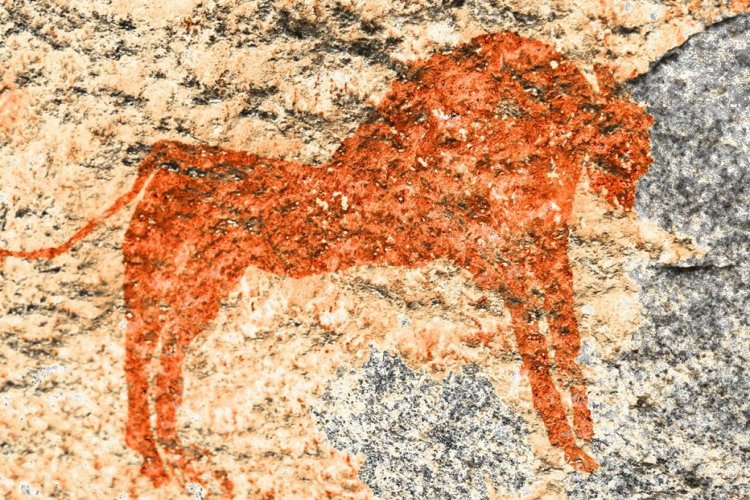
Depiction of a
lion. Photo: M. Grzelczyck
Kondoa district is
famous for its large number of rock paintings made over thousands of years.
However, only a selected area is on the UNESCO World Heritage List.
Kondoa reserve area
was established on the basis of Mary Leakey’s research, conducted in the 50s.
Leakey and her family are known primarily for searching for the first hominids
in the near Olduvai Gorge.
During last year’s
expedition, Grzelczyck made a nearly complete photographic catalog of
these old paintings and began exploration of the Kwa Mtoro area, about 80
km away from the area protected by UNESCO
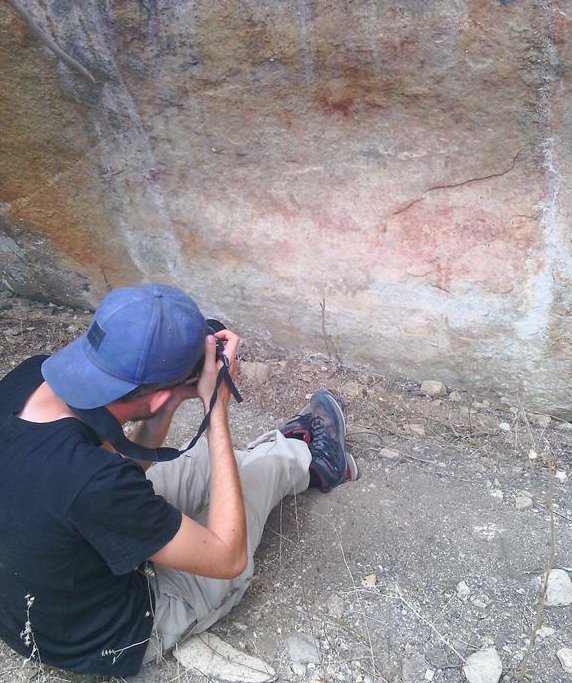
Maciej Grzelczyck
at work.
“I wanted to know
the meaning of cave paintings for the local communities” – Grzelczyck said .
“In the case of the
most famous Paleolithic rock art in France, for example in Lascaux, we do not
have anyone to ask about their meaning. The culture, which created them, is
long gone. Here it is different” – he explained.
The area of Kwa
Mtoro is inhabited by several thousand Sandawe people, who believe that the paintings
were left by their ancestors, and they are the “signs of ancestors”.
The most recent
comprehensive ethnological and art rock study was performed by Australian
scientist Ten Raa almost half a century ago and recently Grzelczyck discovered
previously unknown rock paintings.
“The perception of
paintings by Sandawe can be described as sacred ancient photographs- if a lion
is depicted, they believe it means that lions once lived in this region. Others
are interpreted as part of hunting magic and rituals associated with fertility
and rain” , he explained.
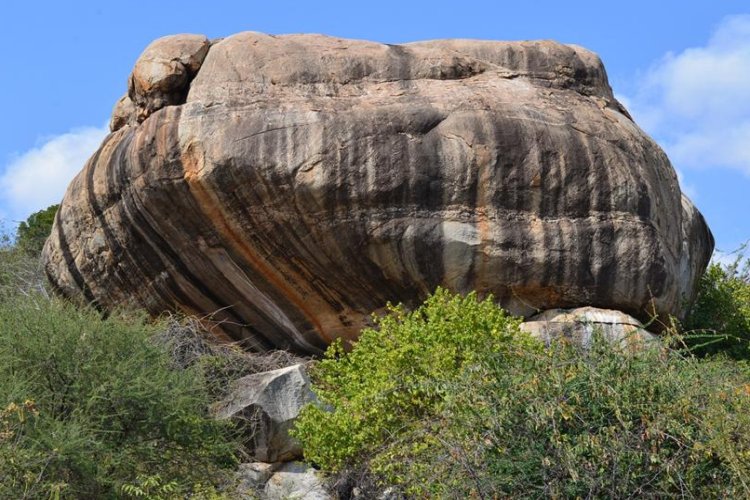
Kondoa rock art
site in Tanzania
The scientist noted
that this is the last call for comprehensive study of the Sandawe. This
community still lives the same way as before the millennia. They do not have
access to electricity, running water.
They live in
lightweight structures built from plants. “Inexorably, however, civilization
enters and thus disappears the knowledge of the past, ancient rituals,
traditions and the meaning of cave paintings” – said the researcher.
According to
Grzelczyck, local shaman is responsible for each of the paintings. A visit to
the rock shelter must always be with his presence – so it was during the
scientist’s visits. At the hillock, the shaman every time celebrated rituals
whose purpose was to make the paintings become visible. According to local
beliefs, without rituals they would show on the rocks. After reaching the
paintings, shaman watered them – explaining that this way he feeds the
ancestors.
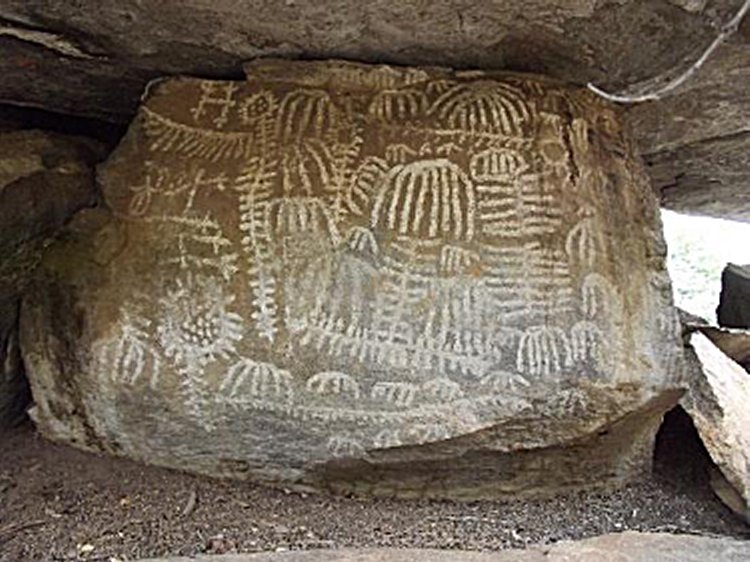
Kondoa area is not
yet known but it is estimated that there are between 150 and 450 decorated rock
shelters, caves and overhanging cliff faces.
Another interesting
part of Grzelczyck’s research confirms that some of the paintings depicted
the Simbo ritual – those depicting a man wielding a horn. The ritual involves
contancting the ancestors under the influence of psychoactive substances,
introducing a trance.
However, none of
the elements of ritual is performed near the paintings.
“I realized that
focusing on rock art itself does not make sense. In contrast, multi-faceted
research is crucial, especially ethnological studies finding numerous links
between the still existing culture and the paintings. This way, the results
are complete” – he added.
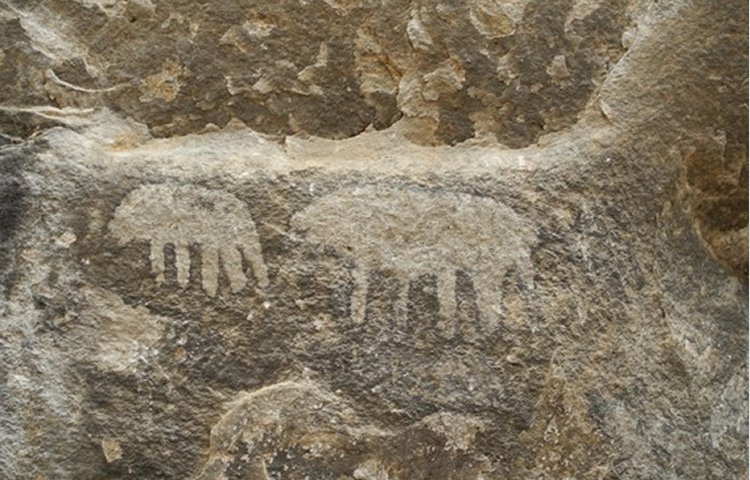
Kondoa rock art,
Tanzania
Interestingly, the
archaeologist discovered unknown paintings in places well-known to scientists.
“In principle, it does not matter whether the site with rock art had already
been known or not. Even those visited earlier by the researchers hid their secrets
to this day. It turns out that thanks to digital processing technology, many of
the paintings can be seen only on a computer screen – thanks to image
processing I was able to verify the findings of other researchers” – added
Grzelczyck.
The archaeologist’s
findings are surprising. It turned out that many of the paintings are more
complex than previously thought. They contain additional human and animal
figures.
Among the most
interesting is a large painting of a giraffe, within the silhouette of which a
number of smaller animals had been painted. There are also animals that
currently exist do not in this area – lions, rhinos; as well as numerous
paintings of antelopes.
Unfortunately,
modern graffiti increasingly appears on the ancient paintings, which this way
are destroyed and forgotten. Archaeologist would like to carry out excavations
around selected rock shelters. However, permission for research costs 40
thousand dollars, which exceeds his budget. This high rate is due to the
proximity of the Great Rift Valley, where for years the Western archaeologists
have been looking for ancestors of man.
No comments:
Post a Comment